
Photo C.Certomà
At the IGU Thematic Conference 2023 “The Ocean and the Sea in Geographical Thought” in Milan Bicocca I chaired session #20 “Territorialising the High Sea. Socio-cultural mapping the interaction between humans and the Ocean” organised with Luisa Galgani (GEOMAR Kiel) and endorsed by the UN Ocean Decade.
The session hosted the following interventions:
- Chiara Certomà Toward socio-cultural territorialization of the Open Sea. Insight from Cultural and Social Geography
- Federico Fornaro Toward socio-cultural territorialization of the Open Sea. Insight from Oceanic Sailing
- Pamela Bucham Team Challenge 10: A transdisciplinary co-conceptualisation of marine/ocean identity
- Gabriella Palermo Trans-oceanic figurations: becoming-with the turbulent materiality in the High Sea
- Nicolo’ Fenu & Paolo Giaccaria Reterritorialize the seaside threshold and its geographical imagination
Fornaro’s invited speech on the experience of Atlantic Ocean crossing on a 6.50-meter boat during the Mini Transact regatta 2013 was complemented with an engaging video.
During the same conference, I also presented a contribution, with the visual support of Raw-News, titled “Staying with the problem in the Open Sea. On the plastisphere as hybrid ecological formation of the Chthlucene” in session #22 on “Turbolent materiality”.
Following the session’s call to elaborate on “new materialisms work to foster the possibility of thinking with the oceanic in order to develop new ecologies”, we propose a provocative exploration of hybrid assemblages that are re-signifying the ecological global life supporting systems in the Open Sea. Building upon the material semiotic and politics of more-than-human assemblages we suggest that Haraway’s speculations on the Chthlucene (2016) can help us at reversing the capitalocentric narrative of the Anthropocene and coping with pressing environmental problems, notably ocean pollution. We engage with the sympoiesis as the chief process forging new kins between societies and the sea so to “stay with the problem” (Haraway, 2016); and draw on the compositions of materialities, imaginaries and forces in the liquid space (Neimanis, A. 2017) to reconceive our common belonginess to the ocean (Peters et al, 2022). Through photographic documentation we explore the emerging ecologies of the plastiphere (i.e. the new biodiversity patterns that have evolved to live on microplastics in marine environments, Zettler et al. 2013) as exemplary topoi of the Chthlucene. These include underwater rests of the Anthropocene (e.g. relicts, ghost nets, infrastructures, and polluted sites…) largely present in the Mediterranean Sea. The sympoietic process of microplastic bacteria is fore-front biological research and at the same time allows us to exercise the Chthulucene “tentacular thinking” (Haraway, 2016). Framed within the marine social science perspective, this perspective makes biology to appear as “a process of constant change and transformation, of ‘posthuman becoming’ and ‘biocultural hope’” (Chandler, 2020, p.102). Therefore, the human/non-human/more-than-human kinship allows us to understand and shape relational values connecting human society and the marine word to deliver behavioral change (McKinley et al., 2020).
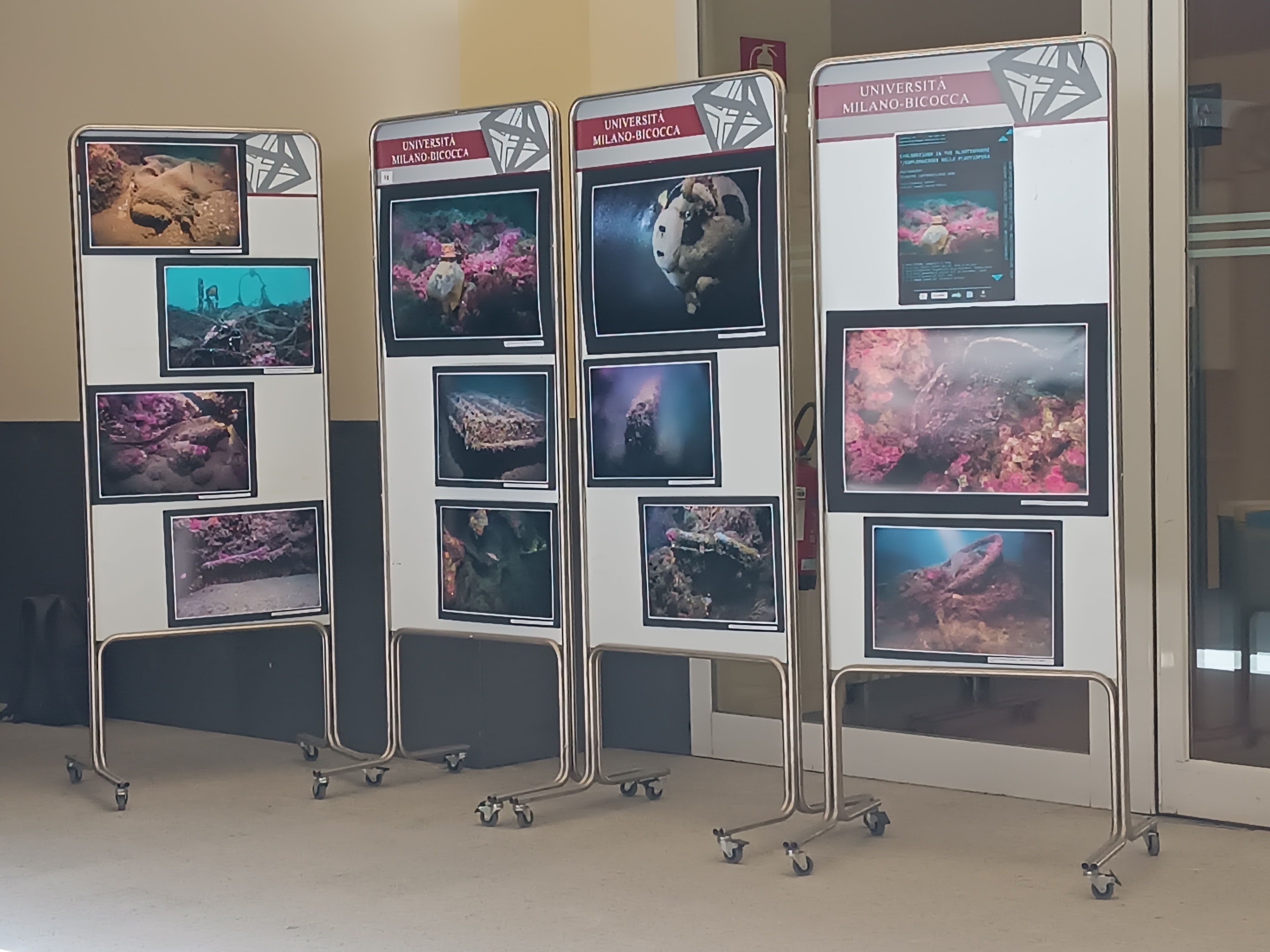
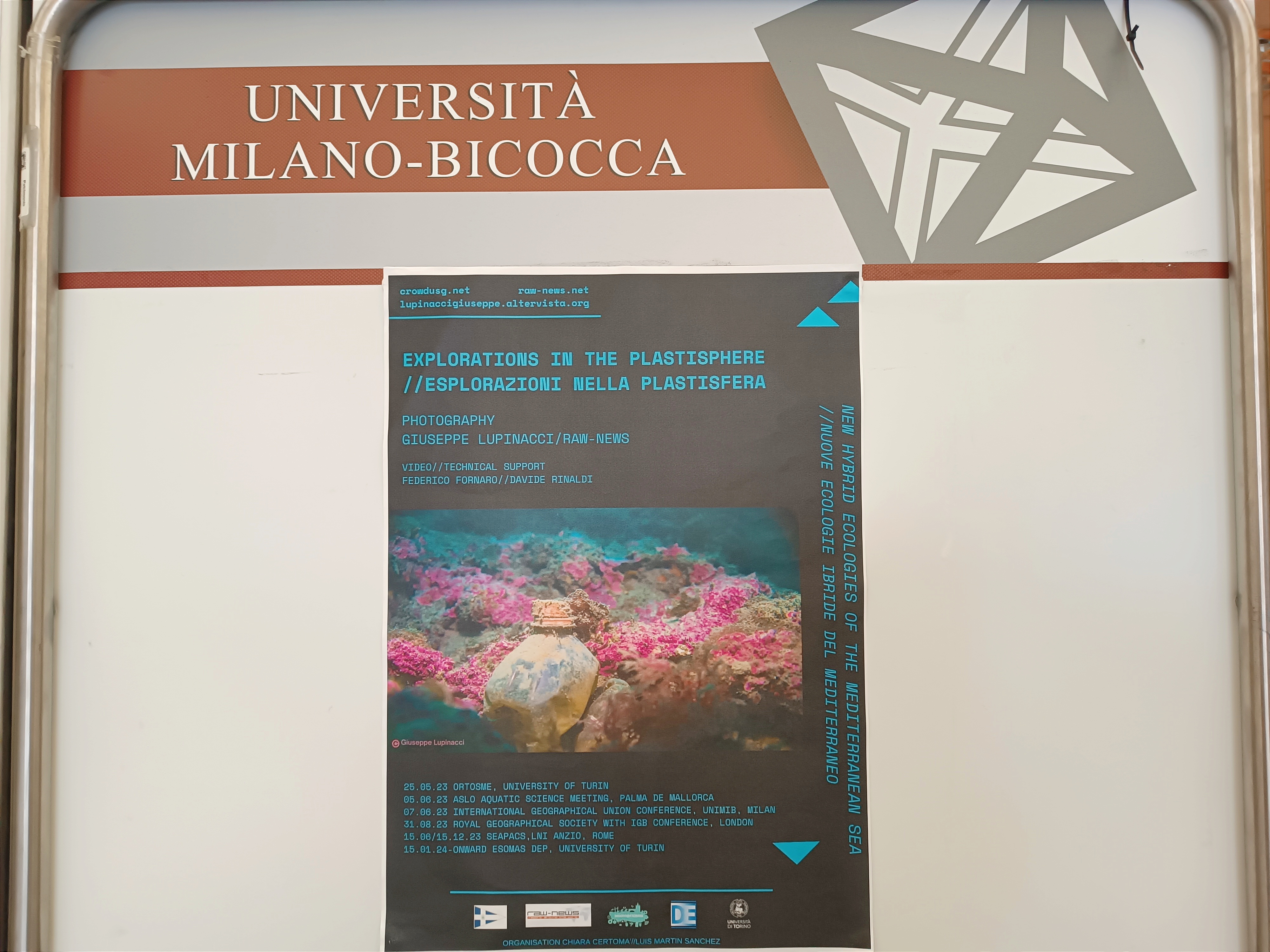
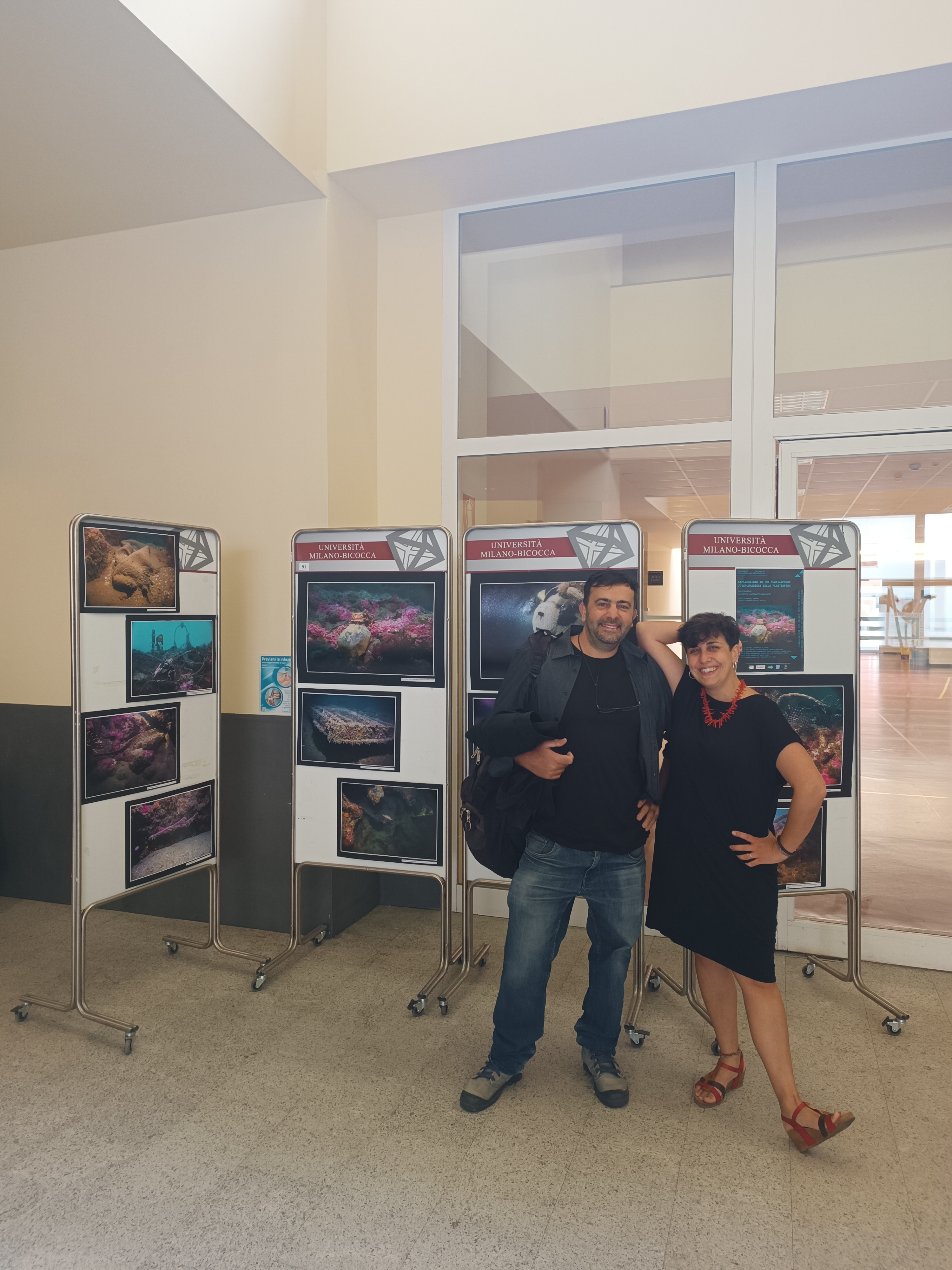
In the conference main hall we have also presented the photographic exhibition “Explorations in the Plastisphere. New Hybrid Ecologies of the Mediterranen Sea”.


The book of abstracts is available here
 Chiara Certomà
Leave a comment