
[photo G.Lupinacci]
Together with some colleagues and friends, we are exploring how sailing can serve as a tool, an object, or a context for scientific research. So we are wondering: who’s sailing for social, natural, action, engaged, participatory or creative research? We want to invite you to exchange on the aim, possibilities, methodologies, practices and results of doing scientific research through, on, about sailing. Our aim is knowing each other and each other’s work and aspirations, networking, providing mutual suggestions and support, cross-fertilising and contaminate own perspectives. And potentially find new ways of working together (or aligning our present collaboration), funds and occasions to do it, in connection with the research and action networks we are all engaged in. Sailing-scientists from all scientific domains are invited to join. While going out to sea—whether by sail or motorboat—is essential for oceanography, marine biology, and many other natural-science disciplines, sailing also opens up radically different approaches to social and cultural research. Being at sea offers new perspectives on reality, shapes our understanding of major environmental challenges, and affects the ways we make sense of the world. Moreover, “research under sail” can contribute to decarbonising access to the ocean, bringing people closer to marine environments and reclaiming sailing as an ancient, affordable, and sustainable way of moving and engaging directly with the most pervasive environment on Earth. This also helps to challenge the perception of sailing as an exclusive, high-cost, elite activity, restoring its potential as a shared and accessible practice. We are therefore interested in gathering experiences, practices, projects, or reflections from those of you who have used (or are currently using) sailing as part of your research, in any discipline. We aim to network, share projects, plans and dreams, looking for opportunities in common. If you would like to contribute or simply share a comment, please feel free to write to chiara.certoma@uniroma1.it. You can share a few lines to tell us who you are (individual or team) and what’s your affiliation (if any), what’s your sailing for research practices (topics, aims, projects, methods); where are you doing it, with who and when and add any link or image you want to share. We would be delighted to include you in the conversation!
- Chiara Certomà, Federico Fornaro and Giuseppe Lupinacci
They work together in the research team CO>SEA (Sapienza University of Rome – MEMOTEF Dep. + Raw-News Visual Production Agency) in the field of Marine Social Geography and Visual Research via engaged participatory action research (https://crowdusg.net/cosea/). They adopted sailing as a practice, means and object of scientific explorations in past and ongoing projects (see for instance SeaPaCS, LADI&Sea and CoSeaLab) and are now operationalising their SailingLab concept for the EU project they are leading titled PartArt4OW (https://partart4ow.eu/sailing-lab ). The sailing lab is a mobile, fluid and mutable concept-lab for marine research for investigating the emergence of oceanic sense of place and social attachment to the Ocean. An example of our visual exploration is available here: https://crowdusg.net/2025/08/16/around-alone-technologies-society-and-the-sea-premiered-at-the-rgs-ac2025/

- Enrico Squarcina
Enrico Squarcina is a full professor of geography at the University of Milano-Bicocca. His research interests focus mainly on geography education and on the human geography of the sea. The overarching research question that guides all his work concerns the cultural and emotional relationship with spaces, particularly with marine spaces. He sails a small sailboat, which is not only a source of pleasure but also a stimulus for a continuous series of questions about his relationship with the sea—perhaps similar to that of at least part of humanity. These questions can be summarized as follows: Why are we so drawn to this liquid space, so different from the solid land where most of humanity lives? How much of this attraction to the sea—and conversely, of the fear or indifference toward it—is cultural? To what extent is cultural “terra-centrism” a discursive strategy used to justify the predatory exploitation of the sea? To what extent do marine conservation efforts aim to preserve the sea as a resource rather than as a value in itself? He has never used his boat as a tool for scientific research, although it offers an opportunity to reflect on the relationship between human beings and the largest part of the Earth’s surface.
- Francesca Alvisi
I am a marine geologist working as a research scientist at the National Research Council (CNR) since 2004 at the Institute of Marine Sciences (ISMAR) in Bologna, Italy. One of my main areas of research is coastal and transitional marine environments, where I study sediment dynamics, the relationship between seabed characteristics and the development of hypoxic crises, and their influence on benthic fauna. To do this, we collect surface samples of bottom sediment and 20-25 cm long cores at sea to study the characteristics of the current seabed and reconstruct the recent sedimentary history of coastal areas. In the laboratory, I mainly carry out granulometric and organic matter analyses. The main area of my current research is the Mediterranean Sea, with a particular focus on the coastal areas of Italy and Greece, but I have also sampled coastal areas in Poland, Belgium and the Caribbean Sea. I recently entered into an official collaboration agreement with the Associazione Progetto Mediterranea with the aim of using their sailing boat as a platform for research and awareness-raising on marine geology issues. At the end of August 2025, I embarked on my first campaign of activities with them in the northern Aegean Sea, mainly of an educational and informative nature. In 2026, new activities are planned with Mediterranea, both on board and on land, during the summer, including sampling coastal lagoons and monitoring some beaches in the Aegean Sea and the Libyan Sea.
Recently, I have also been working on the launch of a Citizen Science project aimed at raising public awareness of the disappearance of beaches and sand along rivers and in marine environments. The project involves collecting data from sailing boats and from land on the geomorphological characteristics of sandy beaches, as well as taking samples for geochemical analysis. Personal website:https://publications.cnr.it/authors/francesca.alvisi Walking on the sea traces:https://sites.google.com/view/camminandosulletraccedelmare/home
- Branka Valcic
She used to be a researcher and is now a sailor with his own sailing boat and run her own small business and a non-profit organization. She has almost 30 years of experience on boats, holds a skipper’s licence from both Croatia and the UK, and has led numerous cruises in the Adriatic. As a researcher, she worked in Oregon on fisheries and marine protected areas, in Alaska on local communities’ adaptation to climate change, and in Scotland on various MPA projects and on the science–policy–local communities interface. She lives in Croatia, partly on the island of Iž. She likes the idea of “research under sail,” as well as challenging the perception of sailing as an elite activity. Personal web page: https://www.brankavalcic.com/
- Lucy Hunt and Stephen Raimund
Lucy is the founder of Sea Synergy Marine Awareness, Research & Activity Centre, while Spephen is Science Co-ordinator of The Ocean Race. Lucy is senior advisor with The Ocean Race, having just complete 6 months working with the around the world sailing race in which she created the content for The Ocean Race Summits of which 6 were held on four continents with high level speakers such as the United Nations Secretary General Antonio Guterres and the final Summit held at the UN headquarters with many government leaders and ocean heroes calling for better protection of the ocean and recognition of the ocean’s rights. You can find more details here: https://www.theoceanrace.com/en/racing-for-the-ocean/science https://panorama.solutions/en/solution/ocean-race-bringing-sailing-and-science-together-improve-ocean-health ; https://theoceanracescience.com/2025/leg/1?measurement=3&filter=false Personal web page:https://www.smartlab.academy/phds/lucy-hunt
- Stephen Hurrel, Ruth Brennan, Ian Stephen
They embarked on an expedition in 2011 (titled Sea Change https://archive.capefarewell.com/2011expedition/), which was put together by the organisation Cape Farewell.
- Lorena Rocca
With her research team, they are questioning the forms of knowledge that are generated at sea, in an environment that is not merely a logistical setting but a true epistemic device—one capable of reshaping the cognitive, relational, and sensory postures of those who inhabit it. For many years, they have been using sailing as a meeting ground between pedagogy, human geography, sound studies, psychology, neuroscience, art, and marine sciences, convinced that the experience of “being at sea” opens forms of knowledge that are difficult to replicate on land. They work on multiple fronts with the support of the non-profit associative world. With vulnerable adolescents, they have developed intensive educational programmes that weave together navigation, emotional regulation, cooperative practices, and processes of progressive responsibility. The days spent on the boat—six outings of eight hours each, as described in the project Sulle ali del vento—become moments in which the young participants experiment with roles, face micro-unexpected events, verbalize emotions with experienced educators, and engage with the necessity of collaborating within a confined space where one cannot “escape” from relationship. The boat, with its movements, rhythm, and vulnerabilities, becomes a powerful catalyst for psycho-social growth. The same logic guides the activities aimed at older adults, who find in sailing a gentle yet effective form of physical exercise, cognitive stimulation, reinforcement of self-efficacy, and the creation of new social networks. For them, the sailing experience is at once well-being, self-care, learning, and connection with others and with the environment, as shown in the project dedicated to senior navigation. On board AMOS—the regenerated migrant boat transformed into a floating laboratory—they also conduct a multidisciplinary research project that brings together expertise in human geography, pedagogy, neuroscience, sound art, environmental education, marine biology, physiotherapy, ergotherapy, and the technical and cultural knowledge of the sailing community of the association JOD Enjoy. The skippers, trained also as educators and facilitators, play a central role: their presence is never merely technical, because in the handling of the boat a culture of care, attention, balance between risk and safety, and a sensitive reading of the signs of the sea is embodied. This dimension, combined with the systemic vision of the marine biologists working with them within the framework of Ocean Literacy, makes it possible to observe and understand environmental phenomena in an embodied way: the boat’s oscillation, the effort of manoeuvres, the relationship with the winds, and the behaviour of marine fauna become part of how knowledge itself is constructed. For the past three years, they have devoted a full residential week entirely lived on the boat, during which the research group and volunteers inhabit AMOS as a laboratory-space, a place of observation, and a territory of continuous reflection. During those days, they collect data, record the micro-dynamics of shared living, experiment with pedagogical and performative practices, discuss what emerges in daytime and nighttime observations, and co-design the educational routes for the following year. The enforced cohabitation, the necessity of cooperating in every daily gesture, the constant presence of natural elements, and the essential nature of life on board make these moments extraordinarily generative. It is as if the sea itself imposes a different rhythm on thought, and the boat amplifies the intimacy required for reflective research. For them, navigation is therefore both a method and a metaphor: a way of moving through the world while listening to its signals, of welcoming the unexpected, of thinking together in a confined space that is nonetheless open to the horizon, and of learning to cohabit vulnerability and possibility. It is a natural laboratory for transdisciplinary practices, in which knowledge arises from the co-presence of bodies, materials, wind, waves, stories, and silences.
- Pamela Baucham
She is running ia project in which he has been developing an evaluation of personal development, ocean literacy, and marine citizenship in young sail trainees connected to the Pelican of London sail training programme in the UK. See https://pearl.plymouth.ac.uk/sc-research/535/ By the end of the year, they will have a resource pack of materials that can be used by any sail training organisation to evaluate shared outcomes.
- Charlotte Braungardt
We sometimes ask kids to draw the plankton they see under the microscope. We use this as a means of enhancing observational skills, but I think it could link through to creating art, given the right person to facilitate this on board. One of my blog posts shows examples of drawings – clearly there were some talented people on board:https://challenginghabitat.com/2023/09/05/the-art-of-observation/
- Ifigeneia Giannoukakou-Leontsini
Researcher at ICM-CSIC also part of the EU project TIDALArtS.
- Jade Zoghbi
Jade is a marine social scientist who has worked extensively on human–environmental relations, marine protected areas, and whale-watching. She’s interested in continuing projects at the intersection of sailing, the arts, indigenous knowledge, and social sciences.
- Kim de Wolff
Sailing through the Atlantic garbage patch described in the book Synthetic Frontiers.
- Kimberly Peters and Mike Brown
In 2018 we convened this book together which resulted from a week spent on a sailboat together. The chapters were written, edited and developed on board whilst living and, eating and connecting with sea together: https://www.routledge.com/Living-with-the-Sea-Knowledge-Awareness-and-Action/Brown-Peters/p/book/9780367586928 And this paper on the embodied experience and what it is to sail: https://journals.sagepub.com/doi/abs/10.1177/1474474017702510 Personal web page: https://academics.aut.ac.nz/mike.brown/publications
- Eleonora Guadagno
I’m an Associate Professor of Geography (GEOG-01/A) at the Department of Human and Social Sciences of Università Telematica eCampus (Italy). Previously, I was a researcher at the University of Naples “L’Orientale”. I’m currently experimenting with a project that uses open water swimming and sailing as a way to “read” the coast, focusing in particular on the relationships between public and private access to the shoreline. My aims are: to document how coasts are effectively accessible (or not) when you approach them from the sea, not only from planning documents; to understand how tourist uses, privatization, coastal risk and environmental protection coexist – or collide – along the shore; and to connect this to my broader research on coastal landscapes, socio-environmental risk and governance. In practice, I swim or sail along selected coastal segments and record my tracks, take notes and photos from the water line on barriers, signage, bathing concessions, informal access points, degraded or “hidden” areas, and I am planning to import these data into maps and cross them with planning tools, risk maps and land-use data. At the moment I am mainly working along the Tyrrhenian coasts in Southern Italy, especially Campania (urban beaches of Naples, the Domitian coast, islands and small gulfs such as Ischia, which I already study for coastal risk and touristification), and on the island of Ponza, with the support of Prof. Arturo Gallia. Photo in Ischia and Naples 2025
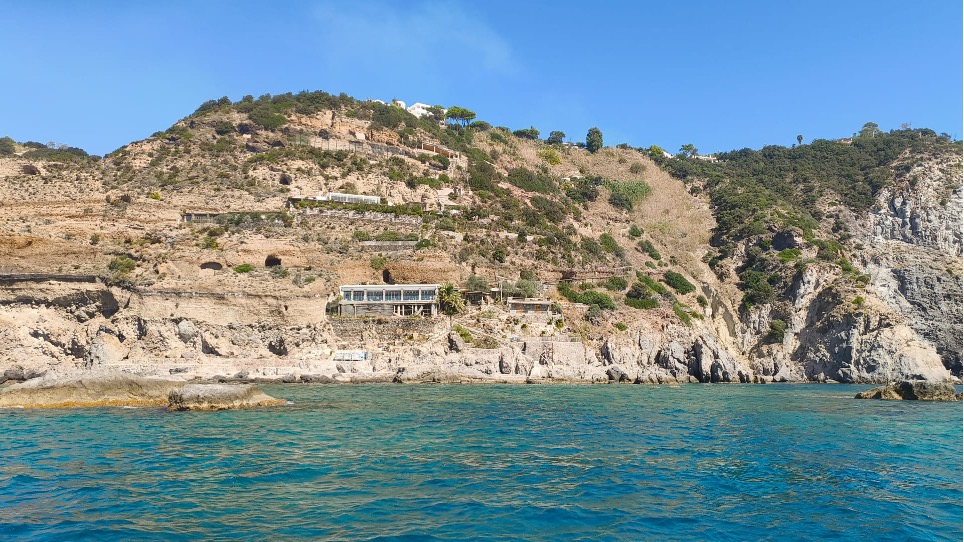
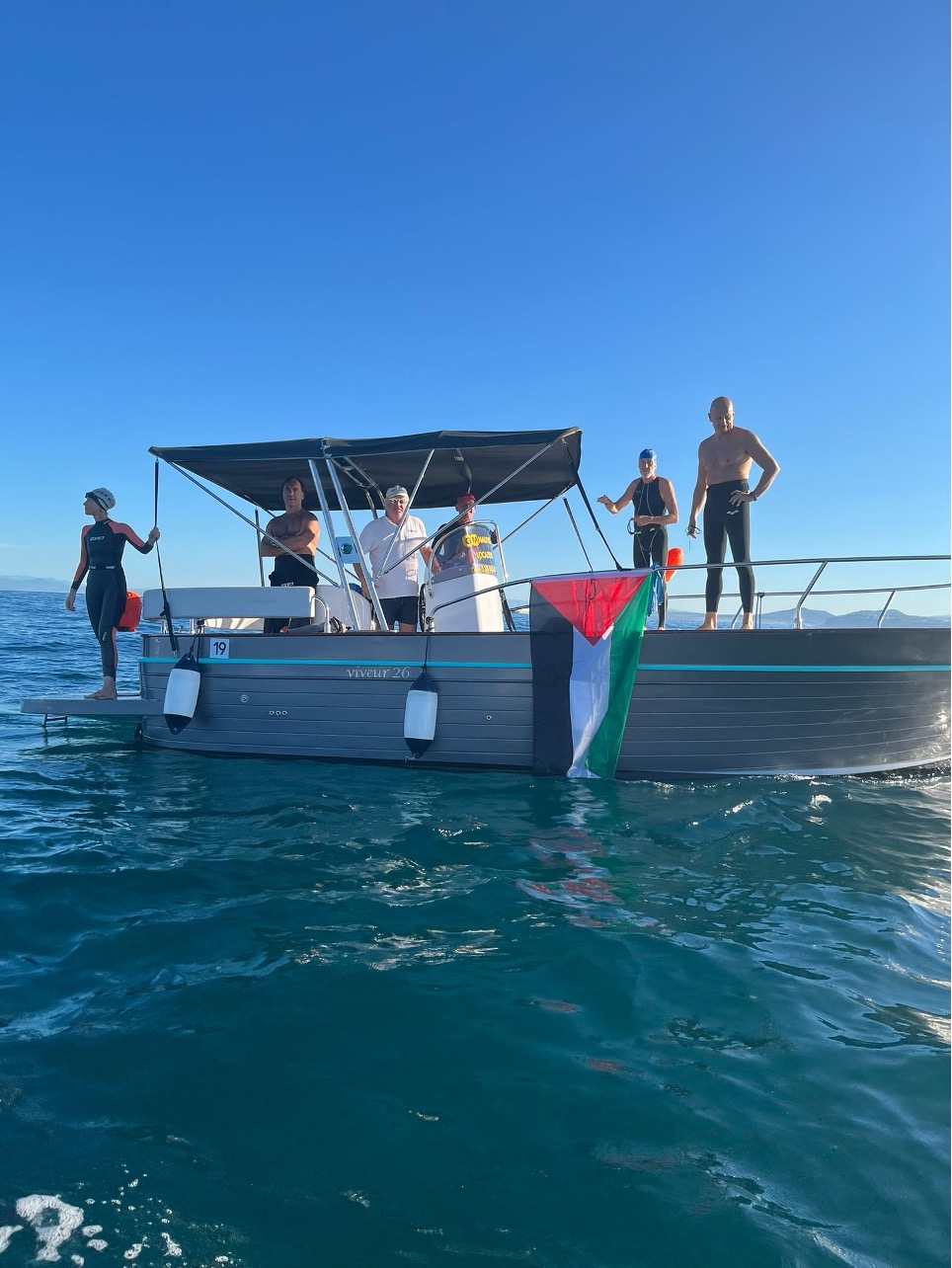

- Montse Pijoan
I am an environmental anthropologist whose work explores how life at sea transforms people—how sailing becomes not only a mode of movement, but a relational, pedagogical, and political environment. Through ethnography under sail, I examine how the ocean reshapes perception, kinship, learning, and identity, and how sailing can serve as a vital place from which to rethink the social world. My doctoral dissertation, Sailing Through Life: Experiencing Difference Within Mutuality on Tall Ships (University of Barcelona – University of Aberdeen, 2020, defended with Distinction and International Mention), is an in-depth ethnography of Sail Training aboard large traditional vessels. Based on experiences of living and working at sea with young crews, the thesis investigates: how the ever-changing oceanic environment demands constant attention, care, and cooperation; how bodies learn through movement, rhythm, and “getting your sea legs”; how relationships at sea emerge from mutual dependence rather than predetermined social categories; how ships become meshworks—dynamic, affective worlds where humans, materials, weather, and memory continually shape one another. Drawing on concepts such as meshwork, hapticality, animacy, and enskilment, the dissertation shows that sailing generates powerful forms of embodied, transformative learning—an education grounded in collaboration, vulnerability, co-presence, and shared responsibility. Life at sea dissolves boundaries between self, others, and environment, creating a deeply relational way of knowing. Pijoan, M. (2025). “The Perception of Movement in Seafaring.” In Beyond Perception: Correspondences with Tim Ingold’s work, edited by C. Gatt & J.P.L. Loovers. Routledge. DOI: 10.4324/9781003343134-20 This chapter develops a central theme of my doctoral research: how sailors perceive, anticipate, and respond to movement—of the sea, the ship, and each other. It conceptualises movement as a mode of knowing, showing how seafaring generates lively correspondences between humans, materials, forces, and environments. Building on this work, I embarked on an ethnographic film project addressing gender, heritage, and maritime traditions. Ethnographic documentary: Sal Oberta. Women on Lateen Sailboats (Pijoan 2024, 67 min) centres the voices, memories, and embodied knowledge of women sailing lateen-rigged boats along the Catalan and Mallorcan coasts. Funded by the Observatori de Patrimoni Etnològic i Immaterial (OPEI) and coordinated within the Catalan Institute of Anthropology, the documentary brings to light: how women’s contributions to lateen-sailing traditions have been silenced or undervalued; how patrimonialisation processes reproduce gendered, political, and economic tensions; how the continuity of this maritime heritage depends on recognising and empowering the young women who are already shaping its future. By connecting women practitioners who had never previously met, the film reveals the urgency of a critical, feminist, and ecological patrimonialisation. It calls for an inclusive, non-binary understanding of traditional sailing that reflects the realities and practices of those who keep this heritage alive. Across my work—on tall ships, in boatyards, and with women revitalising lateen sailing—I approach sailing as: a method (participant observation under sail), a site of learning (through movement, rhythm, and embodied collaboration), a political and cultural space (heritage, inequality, environmental change), and a world-making practice that dissolves boundaries between humans, materials, and the sea. For me, sailing is not only a theme of research; it is the research itself—a dynamic environment that generates new ways of perceiving, relating, and knowing.
- Giorgia Carnovale and Evi Petersen
Giorgia Carnovale (Marine biologist, University of Gothenburg and Marea Oslo https://www.mareaoslo.no/) and Evi Petersen (Environmental psychologist and human movement scientist, OsloMet) in June 2025, studied 124 participants on a sailing voyage across Norway, Sweden, and Denmark to explore how ocean-based outdoor education influences well-being, ocean conservation awareness, and confidence in contributing to sustainability. Using pre- and post-surveys (WHO-5 well-being scale, Climate Action Efficacy Scale, and open-ended questions), we found meaningful shifts in participants’ sense of eco-agency and connection to the sea along with clear well-being implications. An Ocean of Possibility: Investigating well-being and eco-agency on the Skagerrak voyage, see Skagerrak-Seilasen
- Sailing4Science

[Hugo Pratt, 1972]
[italian presentation] Insieme ad alcune colleghe, colleghi e amiche/i, stiamo esplorando in che modo la navigazione a vela possa fungere da strumento, oggetto o contesto per la ricerca scientifica. Se uscire in mare — che sia a vela o a motore — è essenziale per l’oceanografia, la biologia marina e molte altre discipline delle scienze naturali, la navigazione a vela apre anche approcci radicalmente diversi alla ricerca sociale e culturale. Essere in mare offre nuove prospettive sulla realtà, modella la nostra comprensione delle grandi sfide ambientali e influisce sul modo in cui interpretiamo il mondo. Inoltre, la “ricerca a vela” può contribuire alla decarbonizzazione dell’accesso all’oceano, avvicinando le persone agli ambienti marini e recuperando la vela come antica, accessibile e sostenibile modalità di spostamento e di coinvolgimento diretto con l’ambiente più esteso del pianeta. Questo aiuta anche a mettere in discussione la percezione della vela come attività esclusiva, costosa ed elitaria, restituendole il potenziale di pratica condivisa e accessibile. Siamo quindi interessati a raccogliere esperienze, pratiche, progetti o riflessioni da parte di chi di voi ha utilizzato (o sta utilizzando) la navigazione a vela come parte della propria ricerca, in qualsiasi disciplina. Il nostro obiettivo è costruire una rete, condividere progetti, piani (o sogni), e individuare opportunità comuni. Se desiderate contribuire o semplicemente condividere un commento, potete scrivere a chiara.certoma@uniroma1.it- saremo felici di includervi nella conversazione!
 Chiara Certomà