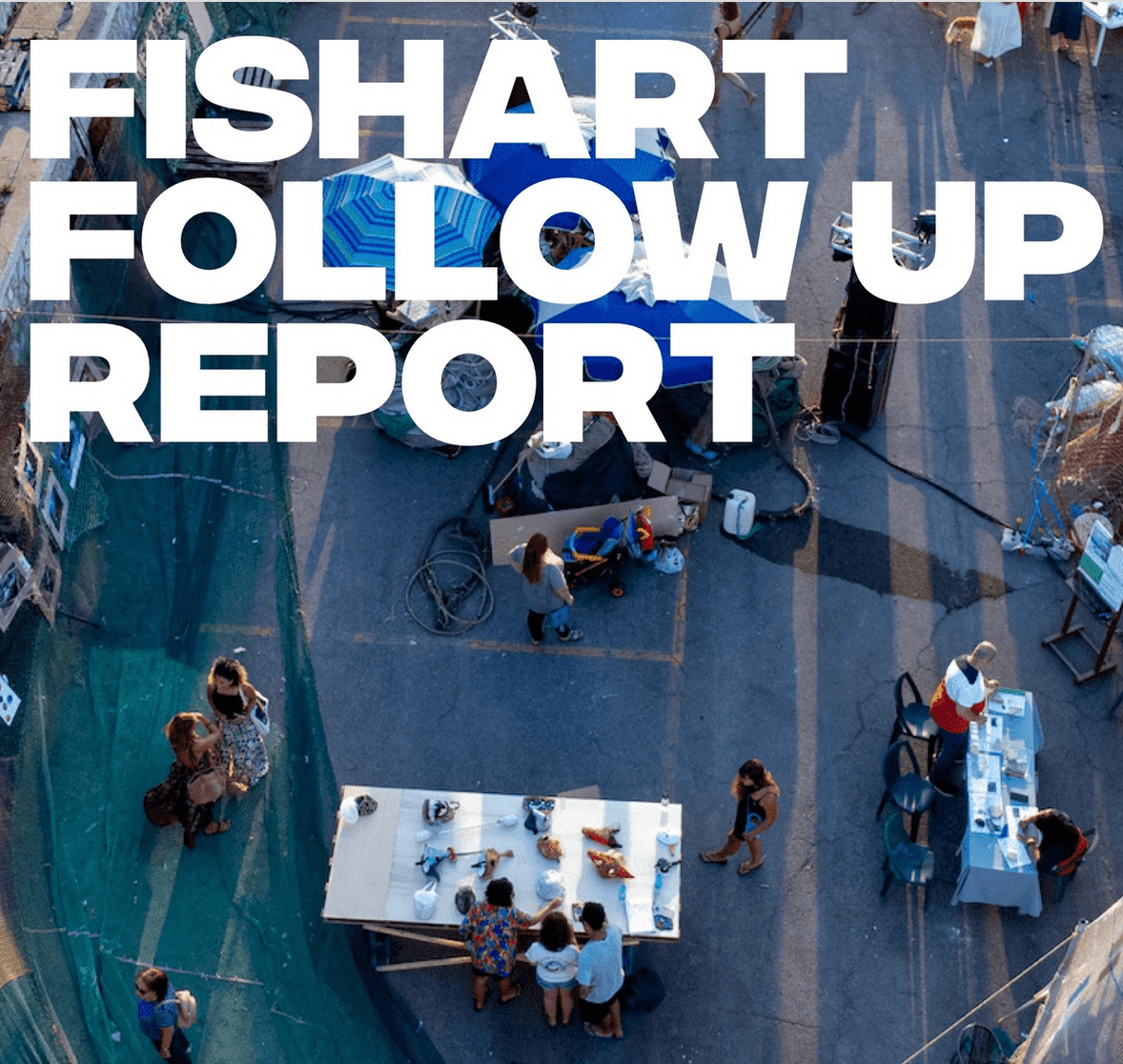
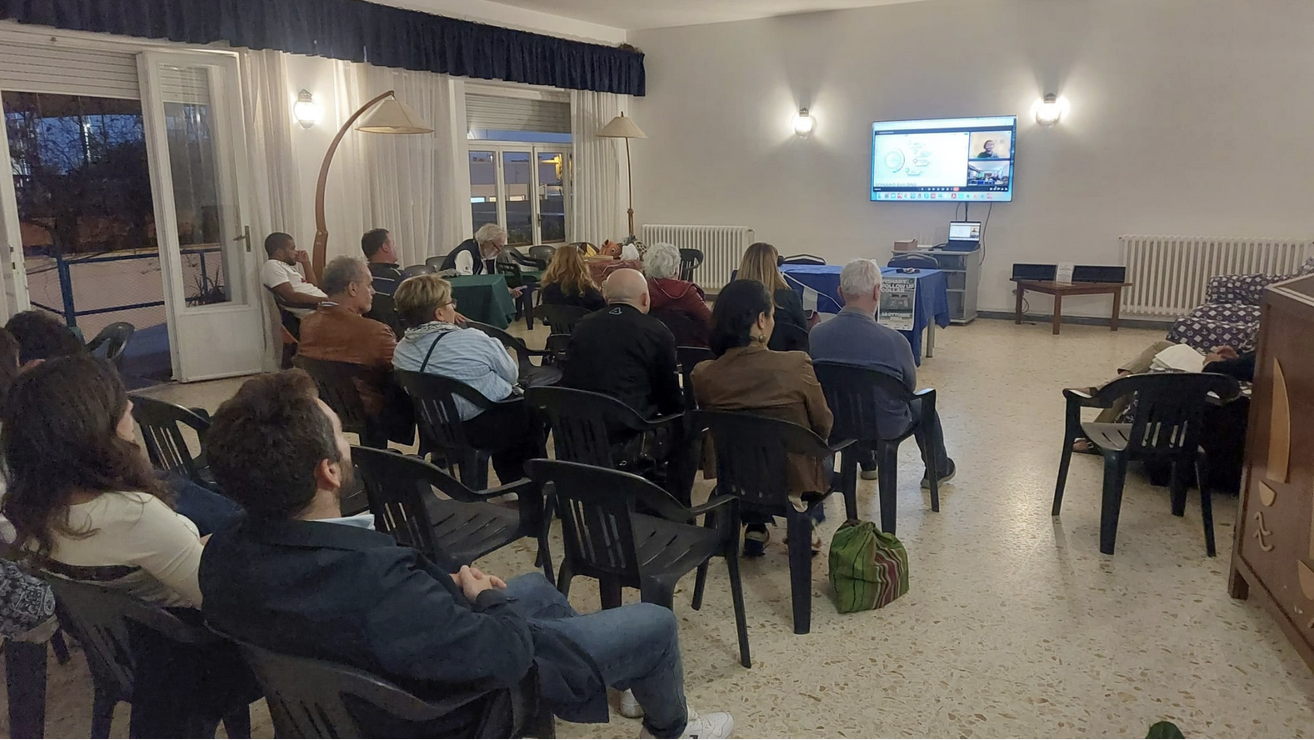
At the end of the project “FishArt. Participatory Art for the Ocean at the Port of Anzio” funded by the New European Bauhaus and led by the University of Turin and the University of Rome Sapienza Dip. Memotef, with the collaboration of Raw-News and Platoon Cultural Development, the Follow-Up Collaboratorium was held on October 20 at the Lega Navale Italiana in Anzio.
The event brought together citizens, port operators and associations to reflect on the future of the Molo Innocenziano and the surrounding areas. Between innovative visions and concrete proposals, ideas emerged that transform the port into a living, welcoming, sustainable and above all a Public Space.
The event was opened by a presentation of the project results by Chiara Certomà (slides available in PDF), Federico Fornaro introduced the video reports and Marcello Dato started the discussion with a presentation on scenario building proposals for the future of the Port of Anzio, developed in collaboration with the mentors Oleg Koefoed and Vanessa Gerotto of the European Commission that will lead to the development of the final follow-up document for the Municipality and the citizens of Anzio.
The event was attended by representatives of schools, fishermen’s cooperatives, environmental associations, artists, sea workers. During the discussion with the participants, the topics addressed in particular:
1. Port Infrastructure and Public Spaces
- Optimization of Existing Resources: One of the key points was to improve the management of the port infrastructure, with particular reference to the Molo Innocenziano, such as waste management and maintenance of the piers and optimization of the management of the seabed and parking for boats. (mentioned the dredging of the Molo Pamphili which at present does not allow participation in important regattas).
- Public and Meeting Spaces: Participants imagined scenic walks where citizens and tourists can relax, enjoy the landscape and experience the port not only as a place of transit, but as a space for socializing. Although the laws require that the port must be completely free for the carrying out of economic activities related to fishing and trade, it would also be desirable to have a port for everyone that is a real public space, with toilets, benches and urban gardens, obviously without hindering the commercial and logistical activities related to the fishing economy.
- Nice and Clean Fish Market: “Like in Valencia!” exclaimed some participants, proposing the creation of an accessible, nice and clean fish market. It could become a point of reference to promote the local fish culture and foster a closer connection between citizens and fishing activity.
2. Cultural, Artistic and Educational Initiatives
FishArt: There was talk of reproducing the FishArt event, perhaps in a smaller version and managed by local schools, with creative activities related to the sea and a real area for children, a small themed playground was also proposed in some dedicated and safe areas where dangerous equipment is not left.
Plastic-Eating Sea Monster Sculptures: One very inspiring proposal is to create interactive metal sculptures of sea monsters, designed to “eat” plastic. These “monsters” would act as marine litter bins, where citizens and fishermen could deposit plastic found in the sea or on the beach. A regular emptying system would be needed, but the idea has the potential to transform port and beach cleanups into a creative and participatory activity.
Permanent Installations and Porto Cultura Lab: In addition to sculptures, the creation of permanent artistic installations and temporary research laboratories, such as the Porto Cultura Lab, where projects focused on the sea and the port could be developed, has been imagined. This initiative would not only give a new cultural meaning to the port space, but would also serve as a meeting point for fishermen, citizens and researchers, promoting dialogues and innovations in the environmental and artistic fields.

3. Environmental Awareness and Circular Economy
Ecological Island and Marine Waste Collection: A particularly sensitive issue concerns the creation of an Ecological Island dedicated exclusively to the collection and disposal of waste recovered from the sea by local fishermen. The problem related to marine waste that requires dedicated treatment through the activation of a supply chain to be built in the Anzio area was discussed. A well-organized ecological island would allow this waste to be treated effectively, promoting a circular economy and involving the local community.
Disposal of Used Oil: The urgency of equipping the port with an efficient system to deliver the used oil produced by fishing vessels to the existing adequate facilities was also highlighted, in order to be able to properly manage the waste from fishing activities, reducing the risk of pollution and accidental oil spills into the sea.
Quantifying Marine Litter: The importance of measuring how much marine litter is collected by the Anzio fishing fleet was discussed. A possible initiative would be to dedicate a special day, such as “World Trash Day”, to raise public awareness, showing data on the quantities of plastic and waste collected each month. This could help make visible the impact of marine litter on the health of our sea. Valorization of Sea Professions: The participants expressed their desire to promote skills related to sea professions, integrating educational programs that can train new generations and, at the same time, encourage sustainable development of the port, in line with the European Commission’s “Blue Growth” guidelines.
4. Governance and Community Participation
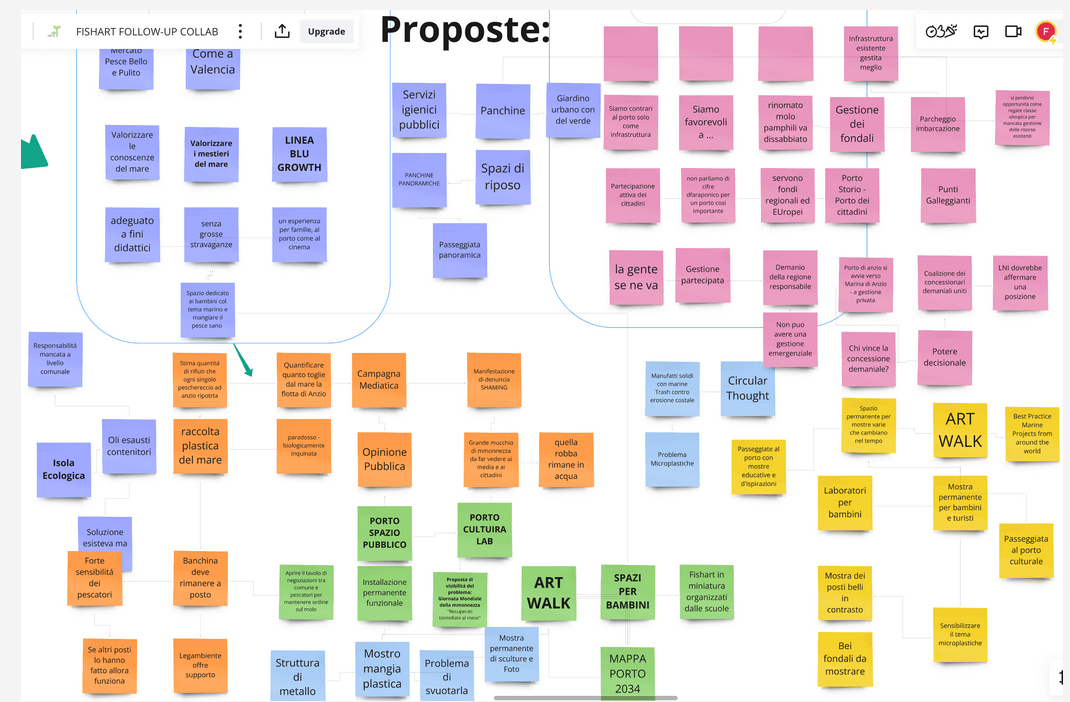
Future of the Port of Anzio: The uncertain situation regarding the fate of the port area of Anzio, determined following the bankruptcy of the Capo d’Anzio company, has brought out the concerns of the participants and a clear indication of the preference that the port space in its entirety be a space under public management and for public use. The participants proposed creating a coalition of public stakeholders (fishermen, traders and associations) and state concessionaires united to defend the port as a common good.The follow-up proposals are available in the visual report here:
Participatory and Transparent Management: One of the most heartfelt themes was that of shared and transparent management of the port. The need to maintain a constant dialogue between the municipal administration, fishermen and other local stakeholders was discussed to ensure that decisions are oriented to preserve the entire port of Anzio both in its commercial and recreational areas, as well as all coastal areas as a common good and therefore of public relevance.
Municipality-Fishermen Negotiation Table: The proposal to open a negotiation table between the Municipality and the fishermen has emerged, to ensure orderly and respectful management of the Molo Innocenziano and the port of Piccola Pesca. This table would not only promote better operational coordination, but would also represent a platform for dialogue to address long-term issues related to the sustainability and management of the port, especially for those who work there.
The collaborator’s proposals, although purely inspirational, represent the wishes of citizens, associations and operators of the port.
The results will remain accessible to citizens and the administration of the municipality of Anzio as a basis for inspiration, to start a dialogue and path together with citizens aimed at maintaining a clean, inviting, functional and inclusive space.
The visual report is available on Zenodo (https://zenodo.org/records/14006486) and below:

[Italian below]
A conclusione del progetto “FishArt. Arte Partecipativa per l’Oceano al Porto di Anzio” finanziato dal New European Bauhaus e guidato dall‘ Universita degli studi di Torino e Università Roma Sapienza Dip. Memotef, con la collaborazione di Raw-News e Platoon Cultural Development il 20 ottobre presso la Lega Navale Italiana di Anzio, si è tenuto il Follow-Up Collaboratorium .
L‘evento ha riunito cittadini, operatori del porto e associazioni per riflettere sul futuro del Molo Innocenziano e delle aree circostanti. Tra visioni innovative e proposte concrete, sono emerse idee che trasformano il porto in uno spazio vivo, accogliente, sostenibile e sopratutto uno Spazio Pubblico.
L’evento è stato aperto da una presentazione dei risultati del progetto da parte di Chiara Certomà (slides disponibili PDF), Federico Fornaro ha introdotto i video reportage e Marcello Dato ha dato il via alla discussione con una presentazione su proposte di scenario building per il futuro del Porto d‘Anzio, sviluppata in collaborazione con i mentori Oleg Koefoed e Vanessa Gerotto della Commissione Europea che porterà all’elaborazione del documento finale di follow up per il Comune e la cittadinanza di Anzio.
All’evento hanno partecipato rappresentanti di rappresentanti delle scuole, delle cooperative dei pescatori, delle associazioni ambientali, artisti, lavoratori del mare. Durante la discussione con i partecipanti sono stati affrontati in particolare i temi descritti nella newsletter qui:
Le proposte di follow-up di FishArt sono disponibili sul report visuale:
Press kit available here https://drive.google.com/drive/folders/18KdQaW8fXCKnAtW4bnt5erRXnSiGZBzO?usp=drive_link
 Chiara Certomà
Leave a comment