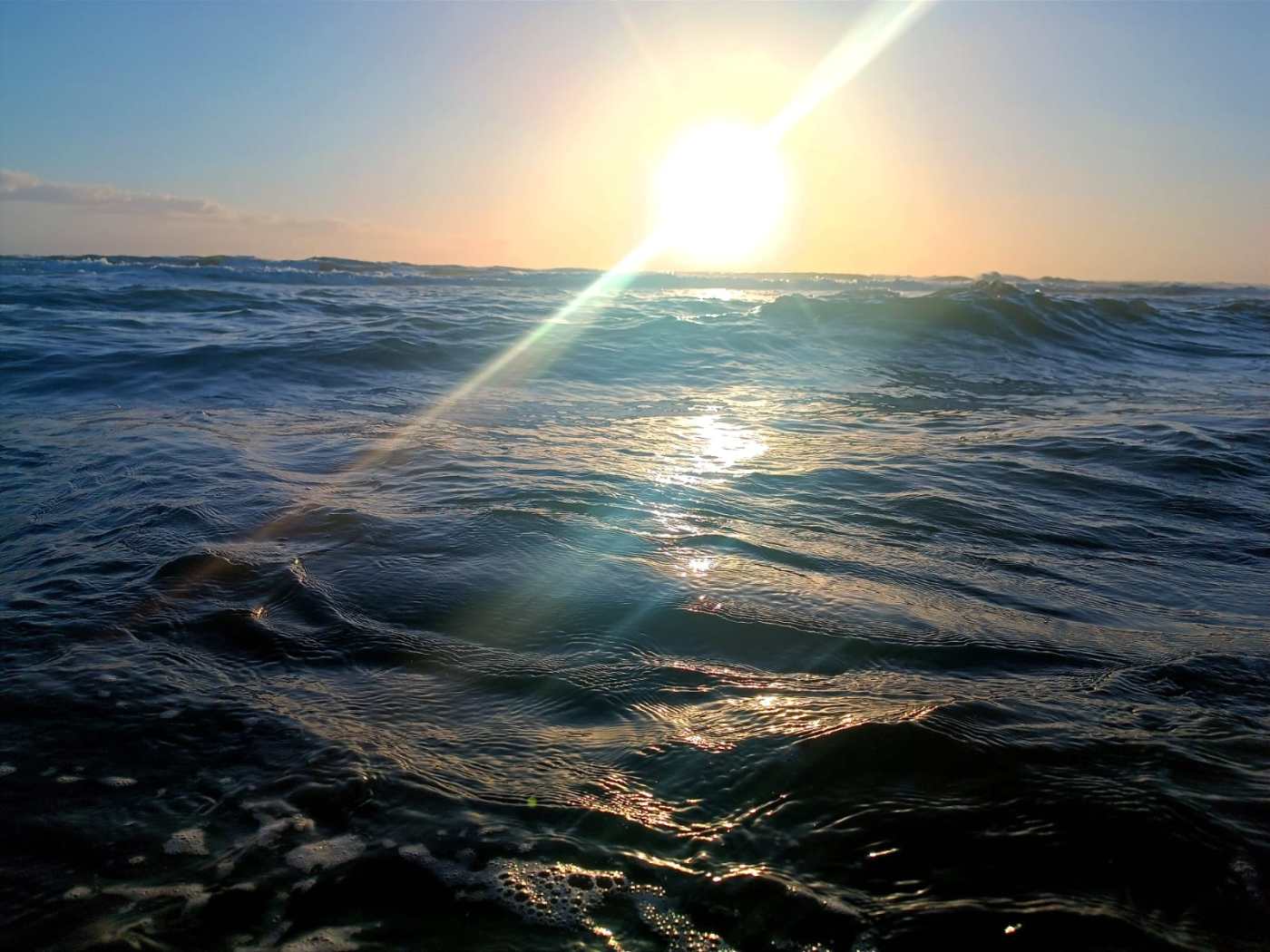
[photo Chiara C]
Together with Luca Bertocci, PoliTo, we are working on a new special issue of Ocean&Society titled “The Ocean as a Discourse: Tangles of Creativity, Science, and Participation Between Society and the Sea”. We will be happy to receive your abstracts for potential papers to be included.
Ocean and Society is an open-access journal from Cogitatio Press. It collects and accelerates knowledge about multiple areas of marine and maritime social sciences. In so doing, we want to stimulate the production and diffusion of a renovated awareness around and new understandings of our relations with/through the sea.
Submission of Abstracts: 15-31 January 2024
Submission of Full Papers: 15-30 June 2025
Publication of the Issue: October/December 2025
Please send to: luca.bertocci@polito.it; chiara.certoma@uniroma1.it
Guidelines for authors here: https://www.cogitatiopress.com/oceanandsociety/pages/view/forauthors.
Check out the call on the journal website: https://www.cogitatiopress.com/oceanandsociety/pages/view/nextissues#OceanDiscourse
The Ocean as a Discourse. Creative tangles of art+science experimentations and spatial weaves between society and the Sea.
The “oceanic turn” revealed that new understandings of and co-productive engagements with the turbulent materiality (Steinberg, 2011) of the Sea are needed, and a proper collective, more-than-human blue discourse is still to be written.
An increasing number of research is emerging, rooting in somehow disparate epistemic and creative communities, to approach discourses on the Ocean and the Ocean as a discourse, from the one side literally made up by the interpretative (turning interventive) practices of human societies, from the other changing them by the evocative power of a stratified, plural, material/embedded/embodies entanglements of the Ocean with living being.
Critical ocean studies (Anderson and Peters 2014; Peters et al. 2023) and marine social science (McKinley et al.2020) are exploring the multiple oceanic socio-spatialities (Chen et al. 2013; DeLoughrey 2017); the more-than-human kins occurring at the sea (Haraway,2016); the turbulences, liquidities and temporalities of the ocean (Steinberg and Peters, 2013); and the multiple forms of human societal engagement and participation in recombinant marine ecologies (Brennan,2022; Buchan et al., 2023). From islands or archipelago-situated gazes (DeLoughrey, 2007, Pugh, 2013), passing through black studies and feminist anthropologies (Neimanis, 2017; Palermo, 2022), for arriving at focuses on port-cities (Hein, 2021) and working-life at sea (Vannini, 2012), investigation in between social sciences and creative elaboration signal the material and symbolic power of discourses about the Ocean that turned the Ocean into a discoursive reality.
We are here interested in enlarging knowledge around such a discursive sea-society porosity and growing wet ubiquity. Our interest goes to transectorial and transdisciplinary-inspired artistic and creative processes promoted by scientists, artists, activists, seagoing people and ocean-lovers that experiment with new forms of investigation and expression to explore, motivate, trigger and support our commitments toward ocean challenges. Particularly, we focus on participatory or collaborative artistic and creative processes on the belief that that engagement can bring about a deeper understanding and commitment of society with ocean hazards and challenges, not only via cultural consumption, but also in experimenting with artistic/performing arts themselves. We are, however, not only interested in these processes per se (and), but also in how art and creative processes can enhance social and natural science research on the ocean. We are interested in how different scientific theories, findings, and methods can be elaborated and shared via artistic creations and co-creative experimentations, and how multiple means and forms of expression can be used to produce collaborative scientific storytelling, science-in-action stories, and emotionally impactful outputs. Embodied and embedded perspectives, from the inside and below narrative approaches able to both describe and stimulate interest and fascination on the scientific aspects of the ocean and society relationships, together with showing the knowledge and art-in-the-making are welcome.
Therefore we invite papers on (but not limited to):
artistic/creative/transformative practices connected with the Ocean, symbolic readings and material tangles toward new more-than-human kinships; And theoretical explorations, field-based examples and methodological dissertations across oceanic research.
Both theoretical and empirical studies are thus welcome which deepen the political, spatial, cultural and economic relevance of the world-ocean for contemporary life makings.
[photo G.Lupinacci]
References
Anderson J., Peters K. (2014) (eds.), Water Worlds: Human Geography of the Ocean, Ashgate, Farnham.
Brennan, R. (2022) Making space for plural ontologies in fisheries governance: Ireland’s disobedient offshore islands, Maritime Studies.
Buchan P., Evans L., Pieraccini M., Barr S. (2023). Marine citizenship: the right to participate in the transformation of the human-ocean relationship for sustainability, PLoS ONE
Deloughrey, E. (2017), Submarine futures of the Anthropocene, Comparative Literature
DeLoughrey, E. M., Routes and roots: Navigating Caribbean and Pacific island literatures,University of Hawaii Press, 2007.
Gabriella Palermo (2022). Ghosts from the Abyss. The imagination of new worlds in the sea-narratives of Afrofuturism. Lo Squaderno, 62, 39-42.
Haraway, D., Saying with the trouble, Duke University Press, Durham, 2016.
Hein, C. (2021). Port City Porosity: Boundaries, Flows, and Territories, Urban Planning, Volume 6, Issue 3, pp. 1-9.
McKinley, E., Acott K., Yates K. (2020) “Marine social sciences: Looking towards a sustainable future”, Environmental Science & Policy, 108
Neimanis, A., Bodies of water. Posthuman Feminist Phenomenology, Bloomsbury Publishing, London, 2017.
Peters, K. & Steinberg, P. (2019). The ocean in excess: Towards a more-thanwet ontology. Dialogues in Human Geography, 9(3), 293-307.
Peters, K. (2016), Water worlds: Human geographies of the ocean, Routledge;
Pugh, J. (2013). Island movements: Thinking with the archipelago. Island Studies Journal, 8, 9–24.
Steinberg, P., E., Liquid Urbanity: Re-engineering the City in a PostTerrestrial World. In: Brunn, S., D. (eds), Engineering Earth The Impacts of Megaengineering Projects, Springer Nature, Berlin, 2011.
Vannini, P., Ferry Tales: Mobility, Place, and Time on Canada’s West Coast, Routledge, New York, 2012.
 Chiara Certomà
Leave a comment